Master ProjectAlive's real-time survival RTS with our comprehensive Ebbtide strategy guide. Learn base building, district management, and troop logistics.
When facing the inevitable downfall of the City of Angels in ProjectAlive's upcoming real-time survival RTS, players need a solid Ebbtide strategy guide to keep their forces alive. Managing a carrier task force offshore while juggling a fragmented urban grid requires an airtight Ebbtide strategy guide to prevent total operational collapse.
Understanding the Operational Theater
In Ebbtide, you take command of TF-1 "Ark"—an offshore carrier task force—alongside a desperate mix of Marines, local police, and National Guard units scattered across Los Angeles. Unlike traditional real-time strategy titles, the core hook relies on an innovative dual-layer zoom system. Every single street functions as an active 3D combat zone, meaning nothing resolves in the background without your direct oversight.
To survive the opening hours, commanders must understand how the Los Angeles basin operates under pressure. The table below breaks down the core parameters of your mission profile.
| Operational Element | Detail / Specification |
|---|
| Theater of Operations | Los Angeles Basin |
| Total Districts | 15 distinct urban sectors |
| Primary Task Force | TF-1 "Ark" (Carrier group) |
| Game Mode | Single-player survival RTS |
| Supported Platforms | Windows and macOS |
According to developer insights, you are not meant to save the city. Instead, your primary objective centers on orchestrating a controlled evacuation while managing a severely restricted pool of military and civil assets.
The Three States of District Management
The map is where you will win or lose your campaign. The 15 districts on your operations board constantly shift between three distinct operational states: Hold, Crisis, and Lost. Without active military intervention, these sectors will automatically slide toward total collapse.
| District State | Description | Required Action |
|---|
| Hold | Stable, secure, generating resources. | Patrol lightly; maintain supply lines. |
| Crisis | Actively under siege by the horde. | Deploy immediate reinforcements and fire support. |
| Lost | Overrun by zombies; enemy staging ground. | Isolate or purge; do not waste frontline troops. |
Applying a proper Ebbtide strategy guide principle means accepting that reinforcing one district automatically weakens another. Because the game's fog of war mechanic dictates that zombies only render inside your troops' direct line of sight, districts that suddenly go quiet are rarely safe—they are simply unmonitored blind spots waiting to erupt.
Essential Directives Before You Deploy
Jumping into the fray without understanding basic logistical constraints is a recipe for a quick defeat. Experienced players and early operational briefs emphasize several immutable laws of engagement that every commander must memorize.
- Accept territorial loss: You cannot hold all 15 districts simultaneously. Every hour spent fighting a losing battle in a doomed sector is an hour stolen from vital evacuation protocols.
- Protect your supply lines: Armor and aircraft rely entirely on nearby friendly bases for ammunition and fuel. Pushing forward without securing a rear-base logistics chain creates an instant countdown to disaster.
- Master the FOB builder: Poor base design kills more operations than the undead. Always verify that your Forward Operating Bases feature wide enough vehicle gates and accessible entry points before constructing perimeter walls.
- Beware the turning tide: Fallen soldiers do not stay dead. Casualties suffered by your infantry units rise again as hostile entities, meaning a poorly managed skirmish compounds your problems exponentially.
- Secure the southern corridor: The Port of LA is your ultimate exit strategy, not just another district to defend. Losing southern access jeopardizes your transition into the subsequent world-map campaign.
Tactical Unit Deployment and Logistics
Coordinating combined arms operations across congested urban corridors requires precise synchronization between naval artillery, air support, and ground forces. The following breakdown illustrates how different asset categories interact during high-intensity defense scenarios.
| Asset Class | Primary Role | Logistical Requirement |
|---|
| Naval Artillery (TF-1) | Long-range fire support, crowd dispersal | High coordination latency, line-of-sight spotting |
| Mechanized Armor | Breakthrough capability, heavy suppression | Requires active FOB proximity for fuel/ammo |
| National Guard / Police | Chokepoint holding, perimeter defense | High casualty vulnerability; risk of reanimation |
| Airlift Units | Rapid repositioning, emergency extraction | High fuel consumption; vulnerable to anti-air or swarm traps |
An effective Ebbtide strategy guide approach dictates using mobile armor to plug gaps only when supported by dedicated infantry screens. Leaving heavy tanks isolated without infantry support inside tight urban alleyways guarantees their destruction by swarming infected.
Frequently Asked Questions
What genre is Ebbtide?
It is a single-player real-time strategy (RTS) game developed by ProjectAlive, featuring survival mechanics, base building, and direct micro-management of military units.
Will there be a multiplayer mode or co-op?
No. Official Steam documentation classifies Ebbtide strictly as a single-player experience focused on campaign survival and evacuation logistics.
Can I save all 15 districts in Los Angeles?
No, the game's narrative and mechanical design explicitly prevent you from holding the entire city. Following this Ebbtide strategy guide, your goal is prioritization and evacuation, not permanent territorial defense.
What platforms will support the game?
The title is currently developed for Windows and macOS platforms, with no current plans for Linux releases or console ports.

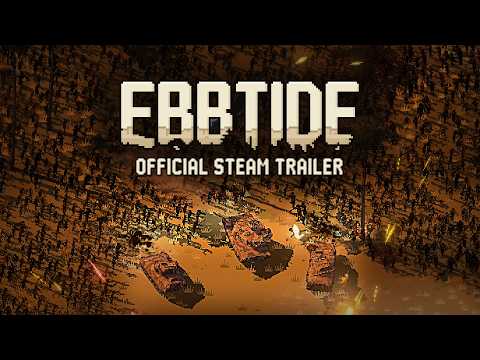 Official mediaMaster ProjectAlive's real-time survival RTS with our comprehensive Ebbtide strategy guide. Learn base building, district management, and troop logistics.YouTube